April 21, 2026

.png)
Living with Psychosis – My Reality
In her new blog, Shine Ambassador Rebecca Gilmartin shares how her experience with psychosis has helped her learn to speak openly to help normalise conversations around mental health.
Note: The following article contains themes related to mental illness and suicide that readers may find distressing.
I am 39 years old, and for as long as I can remember, I have lived with depression and anxiety.
When I was younger, I didn’t realise that what I was experiencing had a name. I honestly thought that this was just how life felt for everyone. I was shy, quiet, and often anxious, but I always managed to push through. I kept going. I went to college, got married, and eventually became a mum to three beautiful children.
From the outside, my life probably looked like everything someone could want. And in many ways, it was. But mental illness doesn’t disappear just because life looks good.
After my first son was born, I suffered from postnatal depression. It was frightening and overwhelming, but with medication, support from my family, and time, I slowly began to feel like myself again. I started to enjoy life, ilmand I believed that chapter was behind me.
Things changed after my third child was born.
I was exhausted in a way I had never experienced before. Not just physically tired, but mentally and emotionally drained. My husband worked long shifts, and I spent most days at home alone with three young children. Many parents live this reality and seem to cope just fine, so I convinced myself that I should too.
I told myself to get on with it.
I pretended I was managing.
I hid how much I was struggling.
Until one night, everything came crashing down.
The children were asleep, and my husband had just arrived home from work. I couldn’t settle. My heart was racing, I couldn’t sit still, and I felt like I couldn’t catch my breath. My thoughts spiralled rapidly, and in that moment, I became completely convinced that I was a terrible mother — that I was holding my children back from having the happy life they deserved.
That night, I reached a point where I didn’t want to be here anymore.
I am incredibly grateful that my husband came to me when he did. His presence saved my life.
After that incident, I finally received professional help. I was diagnosed with anxiety and depression and started medication alongside counselling. For the first time in a long time, I felt heard. I began to understand that my thoughts were not facts — they were symptoms of illness.
As I started to feel a little better, I noticed small things that didn’t feel quite right.
At first, it was subtle. I would hear my baby crying when she wasn’t at home or wasn’t anywhere near me. I brushed it off as tiredness — after all, I was a mum of three and constantly exhausted. But it kept happening.
Then, after a few weeks, it changed.
I began to hear someone whispering close behind my ear. The only way I can describe the voice is deep and raspy — the kind you’d expect to hear in a scary movie. It terrified me, and yet I was too afraid and confused to tell anyone at first.
That was the moment I realised that my mental health struggle was deeper and more complex than I had ever imagined.
At first, I only heard the voice when I was alone, when no one else was around. It said the most hateful, cruel things imaginable. It told me I was worthless, that nobody loved me, that I was draining the life out of everyone around me. It told me I was a bad mother, that I was fat and ugly, and that everyone would be better off if I wasn’t alive.
It was terrifying. And it hurt more than I can explain.
But I kept it all to myself. I was convinced that if I told anyone, they would think I was crazy. Even though I was technically never alone — because the voice followed me everywhere — I had never felt so isolated in my life.
I was afraid to say anything because I didn’t know how people would react, or how they would look at me afterwards. I was afraid of being judged, afraid of being rejected, afraid of becoming “that person.”
Eventually, the voice didn’t wait until I was alone anymore. It started when I was around other people, and I couldn’t hide from my family how distressed I was. Listening to such relentless, cruel whispers day and night became unbearable. It wore me down completely.
That constant torment led me to self-harm and to making a plan to end my life.
This time, I told my family and my mental health team the truth. For my own safety, I was admitted to my local psychiatric hospital. Being there meant I couldn’t harm myself, and for the first time in a long while, I was able to receive the level of care I truly needed.
I was diagnosed with psychosis and started on medication.
After about a week, the voice stopped.
The silence was overwhelming — but in the best possible way. With the noise gone, I was finally able to work on myself and begin healing. Slowly, things improved. Life became as close to ‘normal’ as it could be, and I continued attending counselling, which helped me immensely.
Then COVID-19 arrived in Ireland, and like everyone else, our lives changed overnight.
At first, having the children home all the time felt like a novelty. But as the months went on, the lack of routine, the constant pressure, and the sudden loss of face-to-face counselling began to take a serious toll on my mental health again.
I felt it creeping back — the exhaustion, the numbness, the complete lack of motivation. I felt empty, disconnected, and unable to snap out of it. And just like before, I tried to pretend everything was okay.
My family could see that I wasn’t myself, but I was afraid to admit defeat. Afraid I would end up back in hospital. Afraid I would miss precious time at home with my children.
Ironically, that fear became part of what pushed me further down.
I began self-harming again, and the thoughts of ending my life returned. I had a few phone calls with my counsellor, but it wasn’t the same as sitting in the room with her. Still, I was honest about how bad things had become. She was deeply concerned and suggested that I attend A&E.
I was admitted again — this time for seven weeks.
Seven weeks in a psychiatric hospital during COVID, under full restrictions. I didn’t get to see my family at all during that time. What hurts the most to admit is that, at the time, I didn’t even care. I was so unwell that I felt completely disconnected from everything I loved.
Early on during that admission, I experienced another episode of psychosis. This time, it wasn’t frightening — just very strange. I believed there was a little fat witch called Winifred flying around me, always by my side. I knew it didn’t make sense, but it didn’t scare me either.
I remember one night hearing birds singing outside. Instead of finding it peaceful, my mind twisted it into a warning — convincing me that the birds were trying to tell me something bad was coming.
The following day, I was sitting in the day room when I felt an awful, heavy pressure in my chest. I looked towards the door and saw what I can only describe as a dark demon staring at me.
No matter what room I went into, he was always there, pacing back and forth at the doorway. As the days passed, he began to get closer and closer to me. Eventually, I could hear his heavy breathing and even feel his breath on my body.
To say this was the scariest part of my mental health journey is a huge understatement.
Even though I knew this was my mind playing tricks on me, I was absolutely terrified. Terrified of the demon. Terrified of what he might do. I felt unsafe and genuinely afraid that I was going to be hurt.
I spoke to the staff about what I was experiencing. They tried to reassure me that it was my illness, that it wasn’t real — but in that moment, it didn’t help. Instead, I felt more alone than ever.
I was alone in a hospital, being followed by a demon no one else could see. I had people around me, but I felt completely misunderstood. Even when I spoke, it felt like no one truly grasped how real and painful this was for me.
It was heartbreaking.
People often talk about hitting rock bottom, and this was mine. The only way I can describe it is feeling like I was at the bottom of a huge, dark, empty well. My choices were simple but terrifying: stay there or somehow find a way to climb out.
Thankfully, the medication began to work.
Slowly, I started to feel more like myself again. The fear eased. The images faded. I was eventually discharged from hospital. Being home was wonderful — but it was also the beginning of a very long recovery journey.
I continued with counselling, where I learned to understand my emotions and how to express them instead of burying them. Mindfulness became a game changer for me. Learning to live in the present, rather than replaying the past or wishing my life away waiting for the future, helped me reconnect with myself and the world around me.
I am incredibly grateful to be where I am today.
For so long, I felt isolated and alone — all because I was afraid to admit to others, and even to myself, how badly I was struggling. The stigma surrounding mental illness kept me silent and delayed me getting the help I needed.
Now, I share my story in the hope that it helps someone else feel less alone. I want others to feel encouraged to ask for help sooner than I did.
Healing is not linear. There will be ups and downs. But things can get better, and there is help out there.
Please don’t be afraid to speak to someone. If I had done so earlier, I may never have become as unwell as I did.
My name is Rebecca, and I have experienced psychosis. It’s not something I’m happy to have had experienced, but it is part of who I am today. I came from a place where I no longer wanted to be in this world, to now speaking openly about my experiences to help normalise conversations around mental health.
There is no shame in having a mental illness.
And there is no shame in asking for help.
Rebecca has always been deeply grateful for the counsellors and psychologists who supported her throughout her personal journey. Inspired by their impact, she decided to pursue a career in the field and is currently in the final year of her Masters’ degree in Pluralistic Counselling and Psychotherapy. Alongside her studies, Rebecca works within the mental health sector as a Counsellor Coordinator for a charity in the North West, where she continues to support both clients and practitioners.
If you have been affected by this article and are in crisis, please contact Samaritans on 116123 anytime 24/7. Alternatively, if you are not in crisis but would still like support or information on mental health, call Shine on 01 860 1610 Monday to Friday, 9am-5pm.
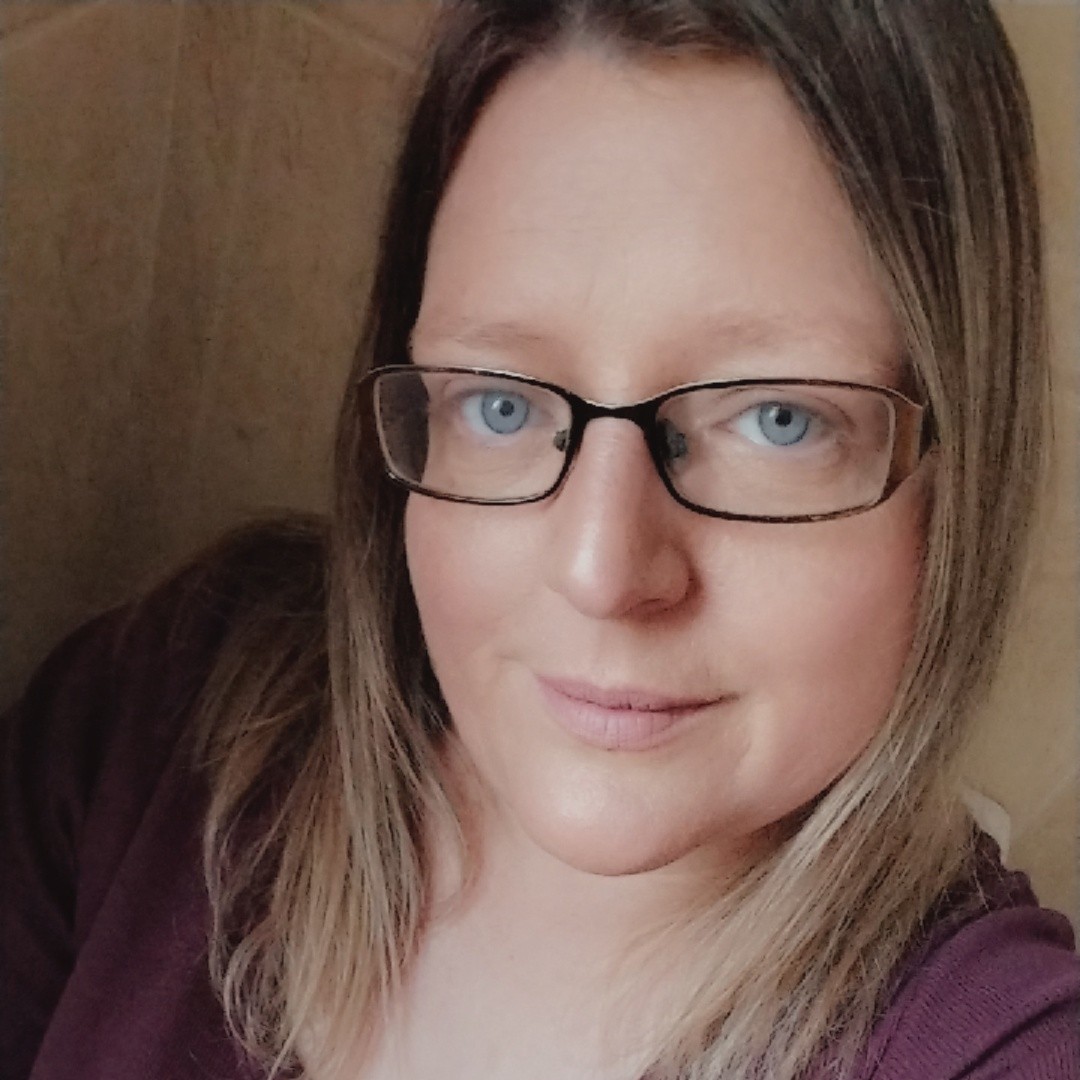
Rebecca Gilmartin
Shine Ambassador
.png)